

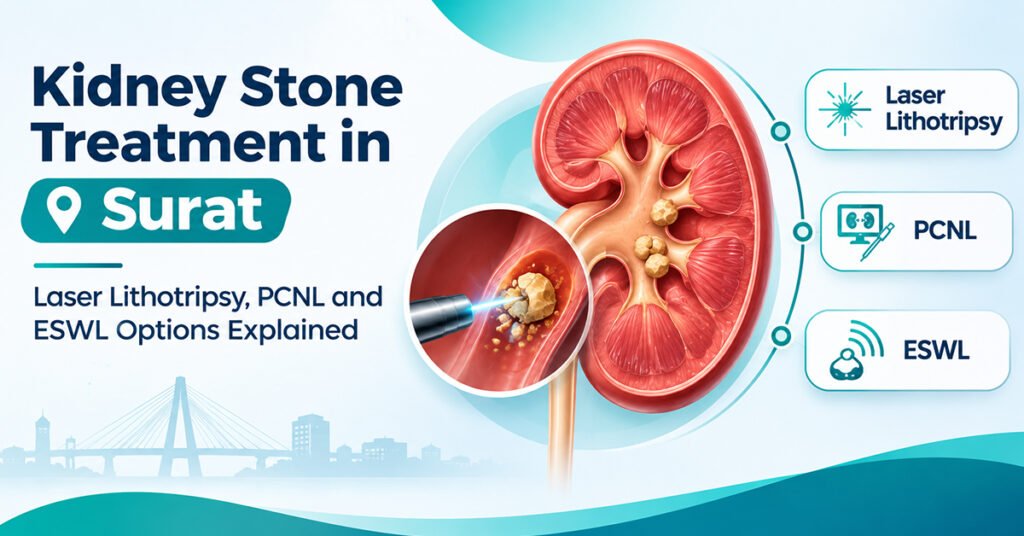
Kidney Stone Treatment in Surat: Laser Lithotripsy, PCNL and ESWL Options Explained
Kidney stone treatment in surat is really about choosing the safest way to clear stones with the least pain, smallest scar and lowest chance of them coming back quickly. If you or a family member has been told a stone needs surgery, the next few decisions you make will decide how much discomfort, time off work and risk you actually face.
This guide walks through how laser lithotripsy, PCNL and ESWL actually work in practice, which patients they suit, and what recovery looks like in real life. It also touches on how to read your scan reports, what to ask a kidney stone doctor in suratand when it is too risky to keep waiting on home remedies.
When Do Kidney Stones Need Active Treatment
Not every stone needs an operation, but some clearly do and waiting too long can damage the kidney. The main triggers are stone size, location, infection, uncontrolled pain and how long the stone has been stuck.
A small stone in the lower ureter that is under 5 mm and moving down on repeat scans may pass with medicines and fluids. A stone that sits in the same place for weeks, or a stone with fever or rising creatinine, usually needs active ureteric stone treatment surat with procedures that clear the blockage before the kidney is harmed.
Types Of Kidney Stone Treatment In Surat
Hospitals in the city offer a mix of endoscopic procedures, keyhole surgery and shockwave options, and which one your surgeon suggests will depend on the stone map on your CT scan. Each method has its own balance of invasiveness, hospital stay and success rate.
For larger stones, some patients who first ask about simple kidney stone laser surgery surat are surprised when the surgeon advises a keyhole route instead, and that usually happens for good reasons related to stone size and kidney anatomy.
Endoscopic Laser Lithotripsy Through The Urinary Tract
Endoscopic laser treatments use a telescope passed through the urine passage without any cut on the skin. The surgeon breaks the stone with a laser fibre and removes fragments with baskets or by dusting them to powder that passes with urine.
For stones in the ureter or in the lower pole of the kidney, endoscopic laser lithotripsy is often preferred because it avoids any puncture into the kidney and generally has a shorter hospital stay.
PCNL For Large Or Complex Kidney Stones
When stones are too big for endoscopic dusting, a small keyhole directly into the kidney is usually safer. This is where PCNL surgery in surat comes in, as it lets the surgeon reach large stone burdens and clear them more completely in one sitting.
Patients with stag horn stones that fill much of the kidney collecting system are almost always better served with a planned PCNL than with repeated sessions of shockwaves or ureteroscopic attempts that leave many fragments behind.
ESWL Shockwave Treatment From Outside
ESWL uses focused sound waves from outside the body to crack stones so that fragments can pass in the urine over the next few weeks. There is no cut, no telescope and many patients go home the same day.
Results of ESWL drop sharply once stones are very hard or larger than roughly 1.5 to 2 centimetres, so many centres now restrict it to selected cases and prefer to keep it as a backup if patients are not fit for anaesthesia.
How Laser Lithotripsy Works In Practice
Laser lithotripsy uses a thin fibre inside a scope to deliver energy directly on the stone surface, and the surgeon controls whether to dust or fragment the stone. Modern systems allow very precise work in narrow ureters where older rigid instruments struggled.
For patients worried about scars or cuts, asking specifically about kidney stone laser surgery surat often starts a discussion about flexible scopes, stents and what to expect in the first week after discharge.
Endoscopic Laser Lithotripsy For Ureteric Stones
For ureter stones, the scope usually goes through the natural urinary passage up to the stone, and a laser breaks it under direct vision. Many patients are discharged the same or next day once pain is controlled.
Those with repeated colic who keep postponing proper ureteric stone treatment surat often find that a single well planned ureteroscopic session gives more relief than months of painkillers and injections.
Flexible Ureteroscopy For Kidney Stones
Flexible ureteroscopy lets the surgeon bend the scope into different calyces of the kidney and reach stones that used to need keyhole punctures. It is especially useful for stones up to moderate size in anatomically narrow kidneys.
Doctors will often compare flexible endoscopic options with PCNL for the same patient, and a good urologist for kidney stone in surat will explain why they prefer one line over another for your specific scan rather than giving a one line answer.
When PCNL Is The Better Choice
PCNL, or percutaneous nephrolithotomy, is usually advised for large stones, multiple stones spread across calyces, or stones that have already failed other methods. The surgeon makes a small puncture on the back into the kidney and works through that tract.
For people asking about scar size or time off work for PCNL surgery in suratthe practical answer is that most need a short hospital stay and a few weeks of care with the puncture site, but they avoid the cycle of repeated incomplete treatments.
Mini And Ultra Mini PCNL
Newer techniques use smaller tubes into the kidney, which can reduce blood loss and discomfort in selected patients. They are not right for every stone pattern, especially very hard or bulky stones.
Patients considering cost often ask if fewer days in hospital balance the extra equipment expense, and some centres explain this in writing just as clearly as they break down the Cost of Varicocele Treatment in India for men considering that surgery.
Where Does ESWL Fit In Today
ESWL is still an option for certain stones, especially smaller ones in the kidney that are not too dense on CT. It is usually done as a day care or short stay procedure.
People sometimes expect ESWL to be completely painless, but in real life there can be discomfort during the session and colic when fragments pass, which is why any kidney stone doctor in surat will talk through pain control and follow up scans before scheduling it.
Kidney Stone Treatment In Vesu Surat And Other Areas
Different pockets of the city have centres with slightly different strengths, and patients often ask if they need to travel far for better equipment. In most cases, outcomes depend more on the team’s experience with your stone type than the pin on the map.
For someone searching for kidney stone surgery in vesu suratit is usually smarter to shortlist a few urology units, meet at least one surgeon in person, and then decide where you feel the communication is clearest and the plan is well explained.
Kidney Stone Pain: When To See A Urologist
Severe flank pain, vomiting, visible blood in urine, fever with chills or pain that keeps coming back all mean it is time to stop guessing and see a specialist. Long gaps between attacks do not guarantee safety if the scan still shows a non moving stone.
Anyone who keeps wondering about kidney stone pain when to see urologist can use a simple rule, which is that if painkillers, antibiotics or home remedies are being repeated often without a fresh scan and specialist review, it is already too late to call it minor.
Choosing A Urologist For Kidney Stones
Choosing the right surgeon is less about social media and more about how clearly they explain options, risks and follow up. You should feel that your questions about anaesthesia, stents and future prevention are taken seriously.
While shortlists often start with location based searches like urologist for kidney stone in suratit pays to ask directly how many similar cases they handle in a month and how they monitor patients after surgery.
Conclusion
Picking the right kidney stone procedure is about matching stone size, location and your health status to what each method can safely achieve, and good centres in the city offer the full range. When you compare options for kidney stone treatment in surat, focus less on buzzwords and more on clear explanations, realistic recovery timelines and a follow up plan you can stick to.
If you are facing a decision on stones now, speak to a urologist you trust, carry all your old scans and reports, and ask them to walk you through what they would do if they were in your place, because that is how Subodh Urology itself approaches these choices.
Frequently Asked Questions
Q1. How do I know which kidney stone treatment is right for me
Ans. The right treatment depends on stone size, location, hardness and your overall health. A CT scan report usually guides this decision. Your urologist will match these factors with methods like laser, PCNL or ESWL and explain why they are suggesting one option over another.
Q2. Is laser surgery for kidney stones painful
Ans. Laser procedures are usually done under spinal or general anaesthesia, so you should not feel pain during the surgery. After the procedure there can be burning in urine, mild flank discomfort or stent related symptoms for a few days. Pain control medicines and good hydration usually keep this manageable.
Q3. How long is recovery after PCNL surgery
Ans. Most patients stay in hospital for a short period after PCNL, often a few days depending on their condition. There can be back discomfort around the puncture site and tiredness for some time. Many people can get back to light work within a couple of weeks after the doctor reviews their wound and scans.
Q4. Can ESWL remove all kidney stones in one session
Ans. ESWL can clear some stones in a single sitting, especially if they are small and not too hard. Larger or denser stones may need more than one session and some fragments can remain. Follow up scans are important to see if further treatment is needed.
Q5. Will kidney stones come back after treatment
Ans. Many patients do form stones again over the years if nothing is changed in diet, fluids or medical management. Surgery clears existing stones but does not change the tendency on its own. Regular follow up, drinking enough water and addressing any metabolic issues reduce the chances of repeat stones.
Q6. When should I go to the emergency room for kidney stone pain
Ans. You should go to emergency if stone pain is severe and not settling, if there is fever with chills, repeated vomiting or if you stop passing urine. These can be signs of infection or serious blockage. Getting urgent medical care in those situations protects kidney function and can be life saving.
